The Association for Health Learning and Inference (AHLI) is pleased to announce its inaugural Health AI Summer Camp, taking place June 22–28, 2026 at the University of Washington in Seattle, WA.
This week-long program is designed to support the development of emerging leaders in machine learning for health. The program includes five days of instruction alongside two days dedicated to team building and networking, creating an environment that combines intensive learning with meaningful community engagement.
The Summer Camp brings together researchers, instructors, and collaborators in a highly interactive setting to explore key challenges and emerging opportunities at the intersection of AI and health. Through mentorship, collaborative discussions, and shared problem solving, participants will deepen their technical perspectives while building relationships that extend beyond the program.
More broadly, the program aims to strengthen connections across the field and cultivate a community of researchers and practitioners who will help advance the future of health AI.
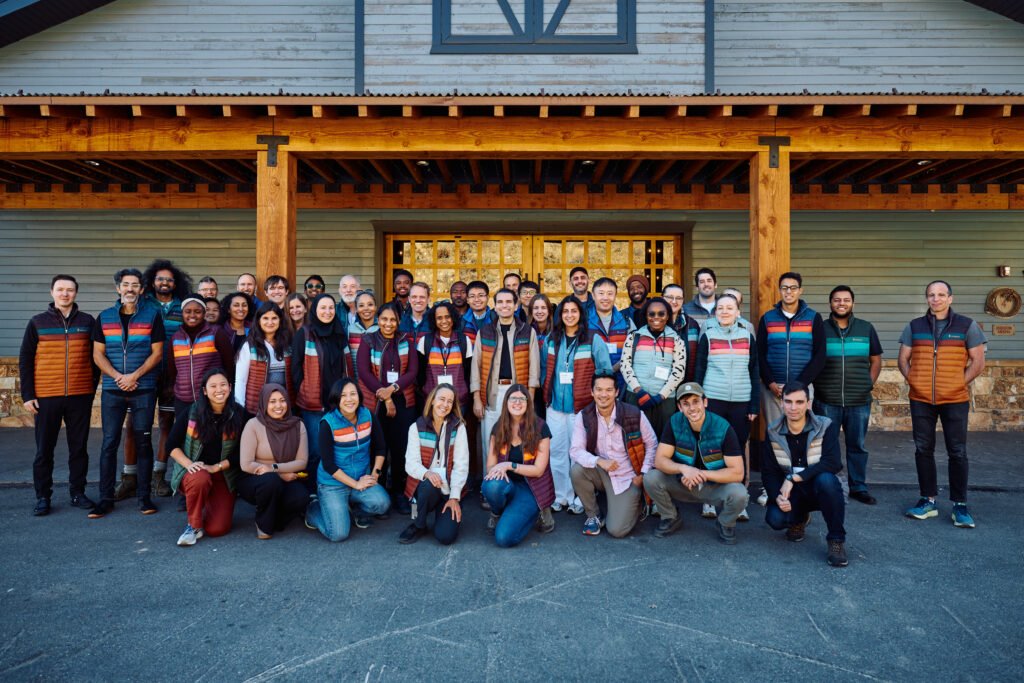
Researchers and community leaders at AHLI’s Winter Camp, where the initial ideas and curriculum for the Health AI Summer Camp were developed.
Register
Registration Access Code Required
This registration form is for accepted AHLI Health AI Summer Camp 2026 participants only.
Please enter the access code provided in your acceptance email to continue. If you believe you should have access but did not receive a code, please contact summercamp@ahli.cc.
Who Should Apply?
This program is designed for graduate students in the later stages of their PhD (typically years 4–6) who are preparing to take on leadership roles in academia, industry, and the broader research ecosystem. First-year postdoctoral researchers are also welcome to apply. Third-year PhD students may be considered on a case-by-case basis if they submit a compelling research statement, provide a strong letter of reference, and are able to cover their own participation costs.
We welcome participants from disciplines such as computer science, electrical engineering, biomedical informatics, statistics/biostatistics, and applied mathematics, as well as public health, neuroscience, and social sciences. In general, participants should have a core technical competency they can develop work in, and an interest in health problems.
Curriculum
The program is comprised of lectures, workshops, and small group discussions on the following topics:
Problems in ML4H and how to approach them — How to translate unmet health needs into operationalized AI tasks, spanning clinical decision-making, operations, public health, and biomedical discovery. Emphasis on what makes health AI problems distinct from general-purpose ML.
Data availability — Understanding how health data are generated, collected, and accessed across modalities including EHR, imaging, genomics, wearables, and clinical text. How the data generation process shapes what problems you can and cannot solve.
Methods and evaluation — Designing and evaluating models specialized to health data and problem constraints, including pre-deployment evaluation pipelines, meaningful performance metrics, and assessment of equity and bias.
Real-world deployment — The regulatory, legal, and operational landscape for deploying health AI systems, including ongoing auditing, human-AI interaction, and what distinguishes good deployments from bad ones.
Finance, compute, and collaborators — Navigating funding from government, industry, and philanthropy; accessing and right-sizing compute resources; and building the data partnerships and interdisciplinary teams needed to move projects forward.
Participants will have the opportunity to apply lessons from the course to their own projects and present to an interdisciplinary audience.
Instructors & Speakers
Emily Alsentzer, Stanford University
Luca Foschini, Sage Bionetworks
Shalmali Joshi, Columbia University
Jonathan Kolstad, UC Berkeley
Muhammad Mamdani, University of Toronto
Matthew McDermott, Columbia University
Tom Pollard, MIT
Deb Raji, UC Berkeley
Olawale Salaudeen, MIT
Prerequisites
We require that the applicant have a prospective project and poster which can be discussed and developed over the course of the summer program. The prospective project must be *plausible*, e.g., related to an actual program of work/study that the applicant can pursue in the next year.
1) Proposed Research Project (One Page)
Please submit a one-page research statement describing a project or research agenda you are currently pursuing or planning to pursue in machine learning for health. You may think of this statement as material that could form the basis of a future job talk or research program.
Your statement should address:
Research vision: What problem are you trying to solve, and why is it important?
Approach: What methods, data, or ideas will you use to address this problem?
Intellectual contribution: What new insight, capability, or scientific advance will your work provide?
Impact: How could this work meaningfully improve areas such as clinical care, genomics, public health, or healthcare systems? Where possible, describe specific outcomes or improvements your work could enable.
Progress to date: Briefly describe any relevant work you have already completed or begun.
Formatting guidelines
Maximum 1 page (excluding references)
11-point standard font, 1.15 spacing, and 1″ margins
Up to one visual figure or diagram allowed (within the one-page limit)
Submit as a PDF
Statements will be evaluated based on the clarity of the idea, intellectual merit, potential impact, and diversity of research topics represented across the cohort.
2) Poster Presentation
Participants should plan to have a poster with published, or submitted, work that they are comfortable presenting. The poster should be printed before the program, and brought with the applicant.
Scholarships
Participants admitted to the inaugural AHLI Summer Camp will receive fully funded scholarships covering travel, accommodation, and meals during the program. Housing will be provided in university dormitories, and meals will be included throughout the week. In select cases, a limited number of participants may attend with independent funding.
These scholarships are made possible through the generous support of the Moore Foundation and other sponsors, whose contributions help ensure that promising researchers from a wide range of institutions and backgrounds can participate in the program.
By removing financial barriers, AHLI aims to bring together a diverse cohort of emerging leaders in the machine learning for health community.
Reference Letter
Applicants are strongly encouraged to submit one letter of reference, preferably from their PhD advisor. A letter from another academic mentor or professional supervisor may also be appropriate.
For third-year PhD applicants, a reference letter from an academic advisor is required and must include confirmation that the applicant has secured, or has a clear plan to secure, independent funding to support their participation.
Referees should email their letter directly to summercamp@ahli.cc with the subject line: “2026 AHLI Summer Camp Reference – [Applicant Name]”
Letters should be submitted by April 15, 2026 at 11:59pm ET.
Important Dates
All deadlines are set to 11:59 PM ET.
Application Deadline: April 15, 2026
Reference Letter Deadline: April 15, 2026
Notification of Acceptance: May 5, 2026
Registratino Deadline: May 15, 2026
Logistics Deadline: May 30, 2026
Program Dates: June 22-28, 2026
Join the Waitlist
Applications Are Now Closed
Thank you for your interest in the AHLI Health AI Summer Camp 2026. The application window is now closed, and we are no longer accepting applications for this year’s cohort.
Applicants will be notified of their status according to the program timeline. For questions, please contact summercamp@ahli.cc.
Your form entry has been saved and a unique link has been created which you can access to resume this form.
Enter your email address to receive the link via email. Alternatively, you can copy and save the link below.
Please note, this link should not be shared and will expire in 30 days, afterwards your form entry will be deleted.
We are currently seeking sponsors to support key program components—such as participant travel grants, networking events, sponsored lunches, and other program activities. If your organization is interested in supporting the AHLI Health AI Summer Camp, please contact us at summercamp@ahli.cc.